Eye on electricity
Grid-connected solar is having its time in the sun
- Generation
- Innovation
New Zealand’s electricity system is rapidly building more grid-scale solar generation. This generation is beginning to show up in the weekly generation mix and is at times outperforming wind and thermal generation. This article explores recent solar generation performance and highlights new solar farms coming to the market in 2026/27.
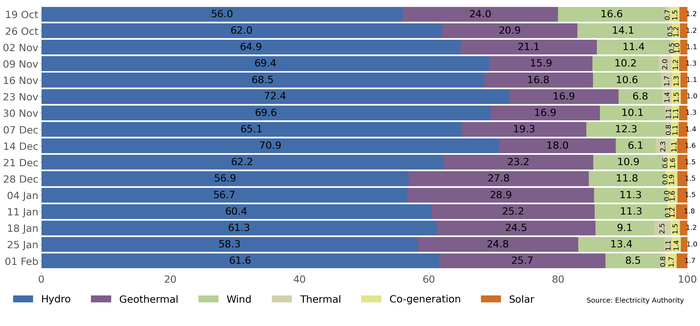
Since 2023, 247MW of grid connected solar has been installed in New Zealand. From mid-October 2025 grid-connected solar has contributed between 1 and 2% of total supply (Figure 1). Solar has often been contributing more than thermal generation1, which has been below 1% most weeks since last October. Overall, generation has been greater than 97% renewable since that time.
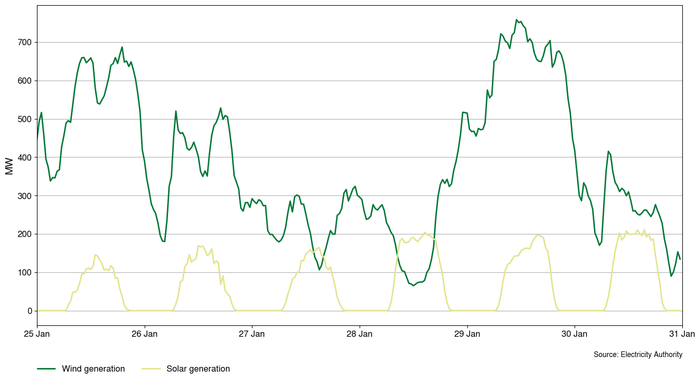
Solar generation is also, at times, outperforming wind generation (which has an installed capacity of 1,257MW). This recently happened on 27-28 January 2026 (Figure 2). Half-hourly solar generation also reached a new half-hourly maximum of 210MW on 30 January 2026 at 3.30pm.
Grid connected solar set to triple by 2028
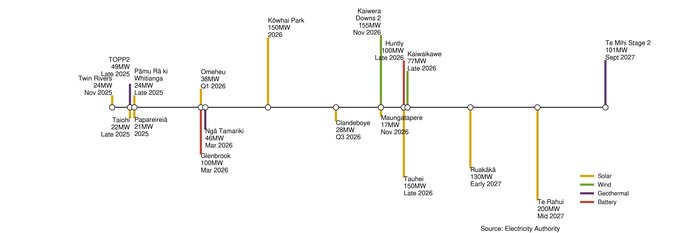
A recent Eye on electricity article explored new electricity generation coming to market in 2026/27, which includes 783MW of new grid connected solar. This would bring the total grid connected solar capacity to 1,031MW. Figure 3 shows the timeline of projects under construction.
Increased intermittent wind and solar generation capacity will see periods of very high renewable generation. During these times, electricity generation fuels like hydro lake water, gas and coal can be stockpiled for times when intermittent generation is low or when demand for electricity is high.
When the proportion of renewable generation is high, wholesale electricity prices will also fall. Since mid-October 2025, while renewable generation has been over 97%, the average wholesale price has been $2.3/MWh. This is much lower than the yearly average wholesale price for 2025 which was $150/MWh.
We’ve improved solar forecasts and will further improve investment pipeline visibility
The Electricity Authority Te Mana Hiko has undertaken several initiatives to help the industry as more intermittent generation is built. These include two significant projects.
Last year, the Authority introduced a hybrid forecasting arrangement and awarded DNV Services a contract to provide centralised wind and solar forecasting services. As of August 2025, all wind and solar generators must use centralised forecasts unless otherwise approved by the Authority. Currently, all except two wind generators are using DNV forecasts. Forecast accuracy has improved under the new arrangement, helping reduce unexpected drops in generation and support more stable market outcomes.
The Authority collects and publishes information on the generation investment pipeline. We have recently consulted on collecting, aggregating and publishing information about significant generation and load connecting to distribution networks. Making this information publicly available would help ensure the right investment in new generation happens at the right time and in the right place. It would also give us a more complete view of electricity supply and demand, helping inform policy decisions and industry efforts to ensure security of supply. Submissions have been received and we plan on making a decision in the next few months.
1. Excluding co-generation
Related News
The growing role of geothermal in New Zealand’s electricity mix
Geothermal energy provides renewable, reliable, steady low-priced baseload electricity. Recent investment in new geothermal generation has increased the amount…
Hedge market summary report – February 2026
We publish monthly hedge market summary reports to support transparency and build confidence in the market. The reports help electricity market participants un…
How thermal generation costs affect wholesale electricity spot prices
New Zealand’s electricity is generated from hydro, wind, solar, geothermal and thermal fuels. Thermal fuels include coal, natural gas and diesel and are an imp…