Eye on electricity
The growing role of geothermal in New Zealand’s electricity mix
- Generation
- Wholesale
Geothermal energy provides renewable, reliable, steady low-priced baseload electricity. Recent investment in new geothermal generation has increased the amount of geothermal capacity available to New Zealand’s power system.
This article explains how new geothermal generation contributes to New Zealand’s baseload electricity supply.
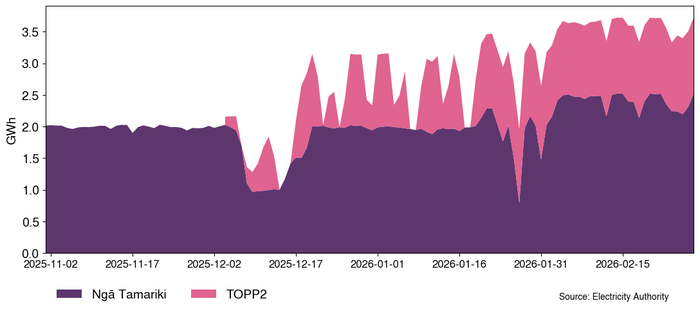
Two geothermal projects have recently finished commissioning. In early December 2025, a new 49MW geothermal plant near Kawerau, known as TOPP2, began operating. An expansion at the Ngā Tamariki geothermal plant, near Taupō, added another 46MW and began commissioning in mid-January 2026.
Figure 1 shows the total daily output of these new projects since 1 November 2025. During commissioning, plant output can vary significantly as units are tested and progressively connected to the power system.
These increases come on top of other geothermal capacity additions, including the 174MW Tauhara geothermal plant and the 51MW Te Huka 3 geothermal plant, both of which began operating in 2024.
Geothermal generation provides steady baseload supply
By using natural heat from the earth, geothermal generation provides a steady supply of electricity to New Zealand’s electricity system that isn’t dependent on variable weather conditions. Alongside geothermal’s low fuel cost, this makes geothermal generation an important source of firm baseload electricity for New Zealand's power system.
Since the output of geothermal plants is steady, each megawatt of geothermal capacity generates more electricity over time than other forms of generation. The two new projects add a combined 96MW of capacity and their constant output is contributing to higher monthly generation.
Monthly proportions of geothermal generation have increased
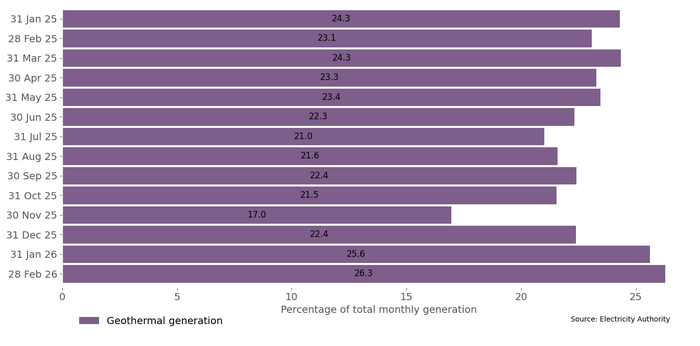
New geothermal capacity has increased geothermal's share of monthly electricity generation. In January and February 2026, geothermal made up 25.6% and 26.3% of total generation respectively (Figure 2). By comparison, geothermal made up 24.3% and 23.1% in the same months in 2025.
These recent geothermal proportions represent a notable increase from November 2025, when geothermal fell to 17% of monthly generation. This is due to a higher number of planned plant outages, which typically occur at this time each year, as electricity demand eases following winter.
Geothermal generation is set to continue to grow
Another 101MW of geothermal generation from Contact Energy’s Te Mihi Stage 2 near Taupō is set to commission in September 2027. This is enough electricity to power 120,000 homes. New geothermal and other generation being built in New Zealand can be tracked through the Electricity Authority’s Generation Investment Pipeline dashboard.
The Government has also announced $50m from the Regional Infrastructure Fund to “help de-risk and ensure geothermal projects are well positioned to lift productivity and strengthen regional resilience”, further supporting the continued expansion of geothermal generation.
Related News
Consultation on plug-in generation and distributed generation connection improvements
The Electricity Authority Te Mana Hiko is seeking feedback on how New Zealand's electricity regulatory framework can support emerging technologies and improve …
Independent review finds improved generation connections process
The Electricity Authority has found Transpower's process for connecting new generation projects to the national grid has improved significantly since Transpowe…
Decision paper on improving prudential security arrangements
The Electricity Authority Te Mana Hiko has today published a decision paper to improve prudential security arrangements by reducing the post-default exit perio…
Subscribe to Market Brief
Get the latest news, updates and market insights from the Electricity Authority direct to your inbox.