Eye on electricity
Marginal generators and prices in the electricity market
- Generation
- Prices
In the New Zealand wholesale electricity market, the price paid to dispatched generators is the nodal ‘spot price’, which is priced to reflect the ‘marginal’ generation needed to meet demand. This design ensures the New Zealand electricity system delivers efficiently and at the lowest cost.
This article shows how often marginal generation comes from renewable sources and the range of prices these generators set to reflect the changing cost of supply.
Renewable generation is most often the marginal generator
In our previous 'Eye on electricity' article we explained how the half-hourly ‘spot price’ is a time-weighted average of all the five-minute prices set by marginal generators.
Figure 1 shows the breakdown of generation types as marginal generators between 2021 and June 2026. In each year hydro generation has been marginal more than 70% of the time. However, the prices hydro generators set varies as the value of stored water changes with hydro storage.
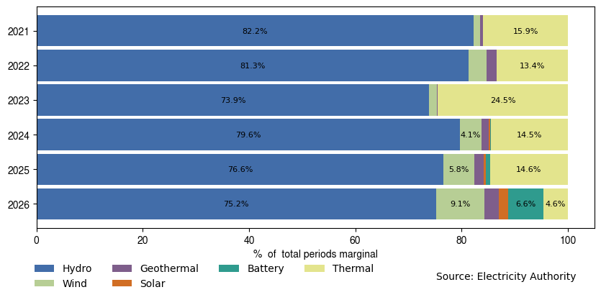
The proportion of thermal generation that has been marginal has fluctuated since 2021. Even though 2024 was considered a ‘dry year’, thermal generation was marginal less often than in 2023, which was considered a ‘wet year’. So far in 2026 thermal generation has been marginal just 4.6% of the time, which is less than grid scale batteries and wind.
Marginal generators set a range of prices depending on the conditions
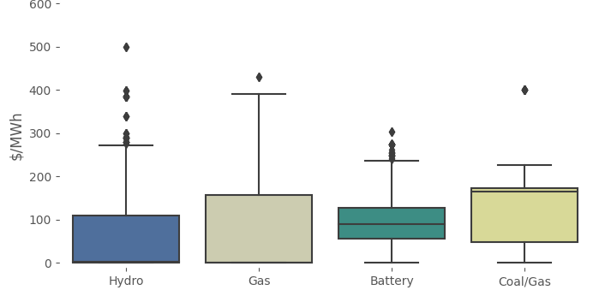
Figure 2 shows the range of prices set by hydro, gas plants, batteries and the Rankines (running either coal or gas) between January and June 2026. The mean hydro marginal price is $55/MWh but has been as high as $500/MWh in one instance, while the mean Rankine coal/gas price is $117/MWh.
Thermal generation can also be marginal at a ‘low price’, as seen by the gas box. This usually occurs at times when minimum thermal generation loads are marginal.
Most marginal thermal generation so far in 2026 has been below estimated cost
When analysing thermal operator marginal price setting, Genesis’s Rankines are separated out as they can use both coal and natural gas as fuel.
Figure 3 examines how gas-fired generation (excluding Rankines) has been marginal for five-minute prices over January-June 2026. Most of these marginal prices are below the Authority’s short run marginal cost approximations for gas and have fluctuated slightly as gas prices have changed. In April, there were 12 instances of marginal prices set by gas-fired plants over $200/MWh. These occurred during the morning and evening peaks during a cold snap on 23-24 April.
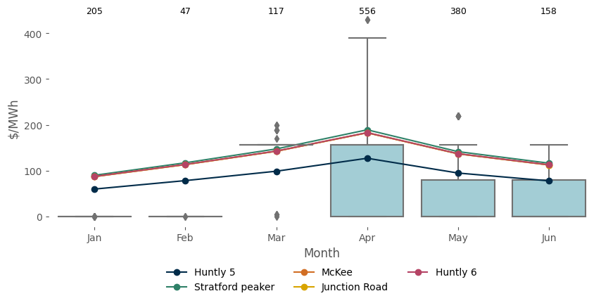
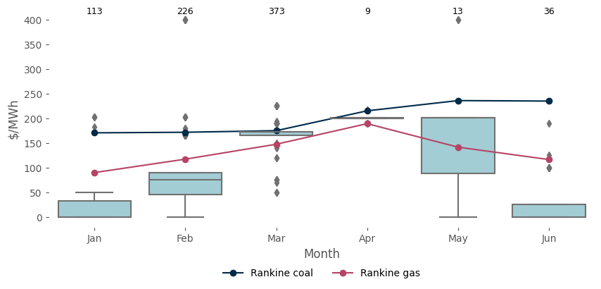
Figure 4 shows prices set by marginal Rankine generation during 2026 so far. Again, most marginal prices have been below the estimated cost of running coal, which has been estimated to be more expensive than gas over 2026.
Marginal spot pricing encourages investment
Wholesale electricity prices that are based on the marginal generator ensure that the cost of electricity supply is reflected in the price. When renewable generation is very high, the cost of producing the next MW of electricity is typically lower and wholesale prices fall. However, if high wholesale prices are sustained, this reflects some scarcity in the market.
In the long term, high average wholesale prices act as a signal to investors that more generation is needed to meet demand. Many developers have reacted to wholesale price trends, and more renewable generation is being built to meet future demand. This investment pipeline can be viewed on the Electricity Authority’s investment dashboard.
Related News
Feedback sought on review of security of supply standards
The Electricity Authority Te Mana Hiko is reviewing New Zealand's security of supply standards to ensure they continue to reflect an efficient level of investm…
New publication of standardised super-peak trading data from market making sessions
The Electricity Authority has published a new dataset of prices and traded volumes from the fortnightly market making sessions of standardised super-peak hedge…
Open letter to distributors as low fixed charge regulations come to an end
Electricity retailers and distributors will need to consider the potential impacts on consumers as they re-adjust pricing ahead of 1 April 2027 when the Govern…
Subscribe to Market Brief
Get the latest news, updates and market insights from the Electricity Authority direct to your inbox.