About the Electricity Innovation Sandbox
An opportunity to test innovative electricity products, services and market arrangements through controlled trials with consumers in Queenstown Lakes and Central Otago.
Apply
Expressions of interest open
We're seeking organisations to conduct Sandbox trials with consumers and communities in Queenstown Lakes and Central Otago to generate evidence to inform future regulatory decisions.
What is the Sandbox?
The Electricity Authority has established the Electricity Innovation Sandbox to test innovative electricity products, services and market arrangements in a real-world environment.
The Sandbox will help us understand the benefits, costs and practical challenges of new approaches that could increase consumer choice, support participation, encourage innovation and strengthen competition in New Zealand's electricity market.
Evidence gathered through the Sandbox will help inform future decisions about potential reforms, including multiple trading relationships and alternative approaches that could deliver similar outcomes.
Why is the Electricity Authority doing this?
The way consumers use electricity is changing. Solar, batteries, electric vehicles and smart technologies are creating new opportunities for people to generate, store and manage their own electricity. However, innovative products and services can be difficult to deliver under current regulatory settings.
The Sandbox will enable these innovations to be tested in the real world. It will help us understand the benefits, costs and practical challenges of potential regulatory reforms
Why should organisations take part?
The Sandbox gives organisations an opportunity to work with the Electricity Authority to generate evidence and inform future decisions about electricity market settings. Through real-world trials, participants can:
- help shape the future of New Zealand's electricity market
- generate evidence about the costs, benefits and impacts of new market arrangements
- better understand customer demand and operational impacts
- test new approaches with consumers in a controlled environment.
Examples of potential trials
We're interested in trials that test multiple trading relationships, or alternative arrangements, and generate evidence about their costs, benefits and challenges. Here are some examples.

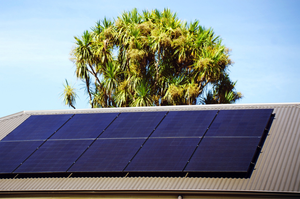
1. Sharing or selling solar power to others
Enabling people and communities to share, sell or donate electricity generated by solar panels and batteries.
2. Solar for rental properties
Creating opportunities for landlords and tenants to benefit from solar panels and other energy technologies installed at rental properties.
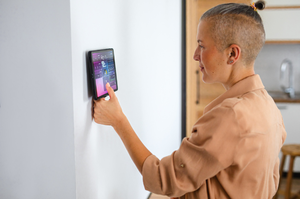
3. Flexible energy services
Enabling people to use specialist providers to manage electric vehicles, hot water cylinders, batteries, heat pumps and other devices.
FAQs
Find answers to common questions about the Sandbox, including how to apply and participate.
Understanding the Sandbox
1. What are multiple trading relationships?
The main focus of the Sandbox is to test multiple trading relationships. Multiple trading relationships allow consumers to access different electricity services from more than one electricity provider.
For example, a consumer might:
- buy electricity from one retailer
- use a specialist provider to manage electric vehicle charging
- sell excess solar generation through a different provider
- participate in a community energy scheme.
Enabling these types of electricity market arrangements could give households and businesses more choice and access to new services.
The Electricity Authority has been exploring multiple trading relationships since 2018. The Sandbox provides an opportunity to test these arrangements in practice and understand their costs and benefits.
2. Why Queenstown Lakes and Central Otago?
After assessing all 38 electricity distribution network regions, we selected Queenstown Lakes and Central Otago because the region has:
- high uptake of technologies such as solar panels, batteries and electric vehicles
- strong community and industry interest in innovation
- a diverse mix of residential, commercial and industrial consumers
- opportunities to test a broad range of scalable use cases.
Running the Sandbox in one region creates a manageable trial environment and makes it easier to monitor and evaluate outcomes.
While trials will take place in Queenstown Lakes and Central Otago, the evidence generated is intended to benefit consumers across New Zealand.
When assessing applications, we'll consider whether successful approaches could be scaled more broadly if regulatory changes were implemented. The findings will help inform future policy and regulatory decisions that could benefit consumers nationwide.
3. What could happen after the Sandbox?
The Sandbox is designed to generate evidence about the costs, benefits and practical challenges of new market arrangements.
The evidence could support:
- changes to market settings, including multiple trading relationships
- alternative approaches that deliver similar outcomes
- no regulatory change.
Participation in the Sandbox does not guarantee future regulatory reform or permanent approval of a trialled approach.
Applying and participating
1. Who can apply and how?
The Sandbox is open to organisations from across New Zealand, including electricity market participants, technology developers, flexibility service providers, community energy groups, marae, research organisations, commercial and industrial energy users, and other innovators.
Expressions of interest should be developed jointly with all organisations required to deliver the trial, such as retailers, lines companies and metering equipment providers. Applicants should demonstrate that these organisations are committed to participating, as this is critical to the viability of the trial. Some participants may also require exemptions from market rules to support the trial.
To apply:
We are assessing applications in two rounds:
- Round 1 - expressions of interest received by 28 February 2027 will be assessed for Sandbox entry from 1 July 2027
- Round 2 - expressions of interest received between 1 March and 28 May 2027 will be assessed for entry from 1 October 2027.
Selected applicants will work with the Electricity Authority to refine their trial design, agree success measures, identify any regulatory exemption requirements and prepare for implementation.
2. How are applications assessed?
Applications will be assessed against several factors, including:
- alignment with the Sandbox and Authority's objectives
- consumer protection and risk management
- the trial's ability to generate useful and robust evidence
- learning and regulatory value
- feasibility and readiness to deliver the trial
- the potential for broader application if the trial is successful.
We have not set a target number of trials. The number selected will depend on the quality, diversity and feasibility of applications received.
For more information and full assessment criteria, read the expression of interest.
3. What support will participants receive?
Selected participants will work with the Electricity Authority to refine their trial designs, agree monitoring arrangements and identify any regulatory exemptions needed to run the trials.
During the trial, participants will collect and share information so outcomes can be monitored and evaluated.
At the end of the trial, participants will support post-trial reviews and wind down trial activities, including returning consumers and participants to standard arrangements where required.
Managing trials
1. Who pays for trials?
The Electricity Authority is establishing the Sandbox to support learning and innovation.
Participating organisations will be responsible for the costs of developing and delivering their trials. Participation is voluntary and organisations participate at their own risk.
Participants are also responsible for managing the risks associated with their trials and meeting the requirements set out in the application and participation terms and conditions.
2. What happens if a trial doesn't work or needs to be stopped?
The Sandbox is a test-and-learn initiative. Not every trial is expected to succeed, and understanding what does not work can be just as valuable as understanding what does. The key objective is to generate evidence and insights that inform future decision making.
If a trial is no longer meeting its objectives, poses risks to consumers or the electricity market, or does not comply with Sandbox requirements, the Electricity Authority may take action.
Depending on the circumstances, we may require issues to be remedied, vary any trial conditions, withdraw our support or end the trial.
3. What happens during and after the Sandbox?
During the trial, participants will work with the Electricity Authority to monitor and evaluate outcomes. This includes collecting and sharing information and data needed to assess the costs, benefits and impacts of the trial. Depending on the trial, this may include operational, financial and consumer information such as customer savings, export revenue, participant revenue and customer experiences.
The Authority may publish information and findings from Sandbox trials. Where appropriate, information may be aggregated or anonymised to protect confidential or commercially sensitive information.
At the end of the trial, participants will support post-trial reviews and wind down the trial, including returning consumers and participants to standard arrangements where required.
Participation in the Sandbox does not guarantee future exemptions, regulatory reform or permanent approval of a trialled approach.
For consumers
Consumers are at the heart of the Sandbox. The trials rely on households and businesses choosing to take part, helping us build the real-world evidence needed to understand what works and what could benefit all New Zealanders in the future.
1. How can consumers get involved?
If you live or operate a business in Queenstown Lakes and Central Otago you may have an opportunity to participate in Sandbox trials and try new products, services and market arrangements.
Participation will be voluntary, and opportunities will depend on the Sandbox trials selected.
We'll share information on how you can get involved once successful trials are confirmed.
2. Will consumers be protected during the trials?
Protecting consumers is an important part of the Sandbox design.
All proposals will be assessed to ensure appropriate arrangements are in place to manage customer, operational, market and security risks.
Sandbox participants will be responsible for managing risks throughout their trials, and the Electricity Authority may intervene if any issues arise.
Question?
If your question is not covered in the expression of interest or FAQs, contact us at innovate@ea.govt.nz