Eye on electricity
Eye on electricity: Dunkelflaute and its impact on our electricity sector
- Generation
- Prices
Dunkelflaute is a German term for ‘dark lull’, meaning cloudy and low wind days, an issue for electricity grids with high proportions of wind and solar generation. These events have been creating headlines overseas, as they result in high electricity prices and the need for firming. Soon, dunkelflaute will have a more prominent impact on New Zealand, with intermittent energy capacity set to rapidly grow.
This article explains the research conducted on simulated occurrences of dunkelflaute in New Zealand by the Authority. It also explains how high prices in August 2024 occurred during periods of dunkelflaute.
Using an algorithm to classify the weather system
Dunkelflaute has been studied overseas but there remains no universal classification for it. To study how dunkelflaute impacts New Zealand, the Authority has utilised an algorithm to classify its occurrence.
We’ve simulated the rolling average intermittent generation output relative to its total capacity factor (of the current intermittent generation portfolio) given historic weather data. We define dunkelflaute periods as those where intermittent output is below a threshold equivalent to 1 Rankine unit (250MW) below mean output.
Our analysis covers weather years from 2011-25. We do not model the impact of outages or other disruptions to wind and solar supply. Additionally, small-scale farms and residential solar is ignored in this study.
Dunkelflaute occurs mostly in winter and autumn
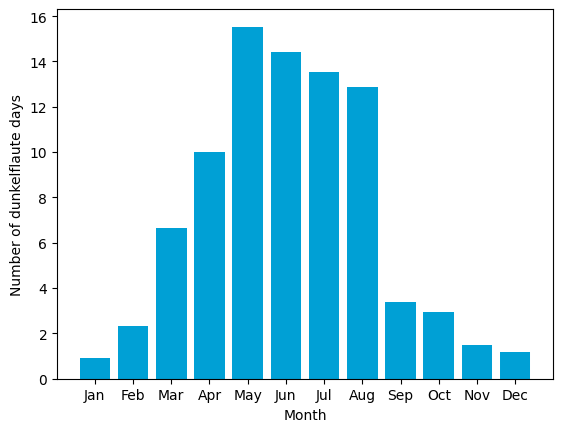
The number of dunkelflaute days per month tracks with seasonal trends of solar and wind generation. Winter and autumn experience the highest numbers of dunkelflaute days per month (Figure 1).
As the highest demands for electricity occur between May and August, New Zealand’s electricity system must provide suitable back-up generation during these months. The key to this firming will be its flexibility, as summer and spring months experience lower demand and higher intermittent generation and likely lower requirements for firming.
In our simulations dunkelflaute mostly lasted 1-2 days in New Zealand (Figure 2). The intermittent nature of dunkelflaute impacts the ability for the electricity system to provide suitable firming.
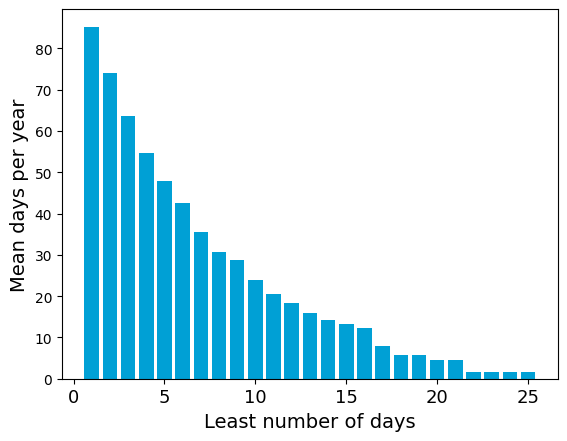
Longer periods of dunkelflaute could be firmed with slow starting thermal, with operators able to recover fixed costs over longer periods, making this generation cheaper than peaking generation.
However, for shorter duration dunkelflaute, the price signals needed for thermal operators to commit generation may not be there. Firming over these shorter periods may instead be met with more expensive peaking generation. Additionally, hydro generation which could ‘flex’, ie, the ability to ramp up and down quickly, could also provide some of this firming. However, many New Zealand hydro schemes have environmental constraints which could limit this.
The dark lulls during winter 2024
The dunkelflaute algorithm was run using renewable generation data from winter 2024. The first two weeks of August 2024 experienced particularly high spot prices, as controlled hydro storage levels reached low levels, and thermal fuel supply was constrained. The Authority’s Review of winter 2024 identified low wind generation as a contributor to high prices during this time.
Our algorithm classified several extensive periods of dunkelflaute over June and July 2024, with a long dunkelflaute period in early August 2024, as highlighted in Figure 3.
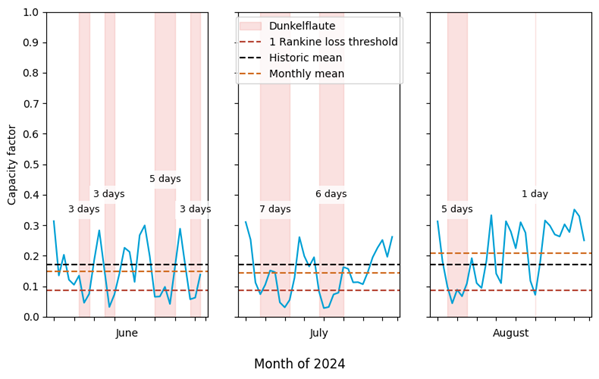
From our study, these period lengths and number of dunkelflaute days per month are not uncommon. However, this particular dunkelflaute period, in combination with fuel scarcity, made firming these ‘darks lulls’ more expensive than they may have otherwise been.
Dunkelflaute in the future
Our simulations found that with increased intermittent generation capacity, the extent of lost generation in dunkelflaute increases. The occurrence of a renewable energy loss which is one Rankine below mean also becomes more frequent with growing renewable capacity and dunkelflaute becomes longer and occurs more often. While additional intermittent generation should bring average wholesale prices down, price spikes may still occur when firming is needed for these ‘dark lulls’.
Python Code
We've included the Python code below used for this analysis. You can use it to reproduce the results or explore your own scenarios.
Related News
Feedback sought on review of security of supply standards
The Electricity Authority Te Mana Hiko is reviewing New Zealand's security of supply standards to ensure they continue to reflect an efficient level of investm…
New publication of standardised super-peak trading data from market making sessions
The Electricity Authority has published a new dataset of prices and traded volumes from the fortnightly market making sessions of standardised super-peak hedge…
Open letter to distributors as low fixed charge regulations come to an end
Electricity retailers and distributors will need to consider the potential impacts on consumers as they re-adjust pricing ahead of 1 April 2027 when the Govern…
Subscribe to Market Brief
Get the latest news, updates and market insights from the Electricity Authority direct to your inbox.